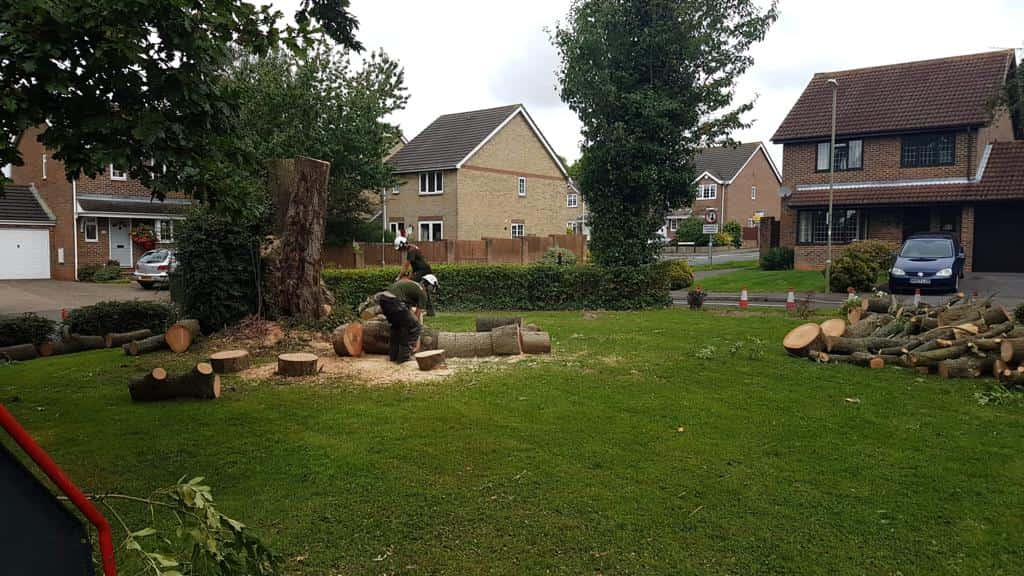
Once a tree has been removed, the remaining stump can become an awkward feature within the garden. It may interfere with mowing, restrict future landscaping, occupy useful space or simply leave the area looking unfinished. Stump grinding provides a practical way to reduce the remaining stump and make the surrounding ground easier to manage.
Understanding what happens during stump grinding can also help homeowners plan what they want to do with the area afterwards. The process involves more than simply removing the visible top of the stump; careful preparation, suitable machinery and consideration of the surrounding garden all contribute to an effective result.
For property owners in Banstead, Surrey, professional stump grinding can help turn an area previously occupied by a tree into space that can be incorporated more effectively into the garden.
What Happens During a Professional Stump Grinding Service?
Stump grinding uses specialist machinery fitted with a rotating cutting wheel. Rather than attempting to pull the entire stump and root system from the ground, the machine gradually reduces the stump into smaller wood fragments.
The process allows the main stump to be ground below the surrounding ground level. This removes the prominent obstruction while avoiding the extensive ground disturbance that can result from trying to excavate a large stump and its complete root system.
The exact approach depends on the stump itself, its position and what surrounds it.
The Area Is Assessed Before Grinding Begins
Before work starts, the stump and its immediate surroundings need to be examined.
Its diameter, height, species and condition can all influence how the grinding work is approached. Access is also important because specialist equipment needs to reach the stump without unnecessarily affecting other parts of the garden.
Nearby walls, fences, paving, planting and other garden features should also be taken into account. Where a stump sits within an established landscaped area, careful planning helps minimise unnecessary disturbance.
This initial assessment also provides an opportunity to consider what the homeowner intends to do with the space afterwards.
The Working Area Is Prepared
The area immediately surrounding the stump may need preparation before the grinder can be positioned.
Loose objects and other obstructions can be cleared so that the equipment can operate effectively. Depending on the stump, some surrounding vegetation or surface material may also need to be moved to provide suitable access.
Preparation is particularly important when working in gardens where space is restricted or where established landscaping needs to be preserved.
A professional approach focuses not only on grinding the stump but also on managing the work in relation to the rest of the garden.
How the Stump Grinding Process Works
Once positioned correctly, the stump grinder’s cutting wheel is moved systematically across the timber.
The teeth on the wheel gradually break down the stump rather than attempting to remove it in one piece. Successive passes reduce the wood until the required level has been reached.
This controlled process makes stump grinding suitable for many locations where digging out the complete stump would cause considerably more disruption.
The resulting material consists largely of small wood chips mixed with some soil from around the stump.
How Far Below Ground Is a Stump Ground?
One of the most useful aspects of stump grinding is that the stump can normally be reduced beneath the immediate surface rather than simply being cut level with the lawn or soil.
The appropriate grinding depth depends partly on what will happen to the area afterwards.
If the objective is simply to remove a raised obstruction, the requirements may differ from an area that will subsequently become lawn or form part of a wider landscaping project.
Discussing the intended use beforehand helps ensure that the stump is treated appropriately for the next stage of the garden.
What Happens to the Tree Roots?
Stump grinding primarily deals with the main stump and accessible portions of the root flare. It does not normally involve excavating every root extending through the surrounding ground.
A mature tree can have a substantial root network spreading well beyond the stump itself. Removing every root would often require considerable excavation and disturbance.
Once the tree has gone, remaining roots beneath the soil generally cease performing their previous function and gradually break down over time.
If particular surface roots are causing an obstruction within the immediate working area, they can be assessed as part of the stump grinding process.
What Is Left Immediately After Grinding?
Once the stump has been ground, there will usually be a mixture of wood chips and soil where the stump previously stood.
The amount can be surprising, particularly with a substantial stump. Solid timber occupies space differently once it has been broken into loose material, so the grinding process can produce a noticeable quantity of debris.
The finished area will therefore not immediately look like an established lawn or completed flower bed.
Instead, stump grinding creates the starting point from which the area can be prepared for its next use.
Can the Grindings Be Used in the Garden?
The material produced during stump grinding can sometimes be useful elsewhere within a garden, depending on its condition and the homeowner’s plans.
However, it is important to recognise that fresh stump grindings are not the same as finished topsoil. Filling the entire hole with loose wood material and immediately expecting grass or other plants to establish successfully may produce disappointing results.
If the area is intended for planting or turfing, some of the grindings may need to be removed and the ground prepared with suitable soil.
Planning the final use of the space helps determine the most appropriate way to manage the material.
Can You Lay Turf Where a Stump Has Been Ground?
An old stump position can often be returned to lawn, but preparation is important.
Simply spreading grass seed or laying turf directly over a large quantity of fresh wood chips is unlikely to provide the best foundation. The area may need excess grindings removed before suitable soil is introduced and prepared to match the surrounding lawn level.
Some settlement can also occur as remaining organic material beneath the surface gradually changes.
Proper preparation helps create a more stable growing area and makes it easier to blend the former stump position into the surrounding garden.
Can You Plant in the Same Location?
The area can potentially be incorporated into a new planting scheme, but what is planted and exactly where it is positioned should be considered carefully.
Remaining roots and organic material beneath the ground can influence the available planting space. The conditions left by a mature tree may also differ from those elsewhere in the garden.
If the intention is to introduce new planting, it can be useful to consider the stump grinding work as part of the wider garden plan rather than as an isolated task.
This allows the area to be prepared with its future purpose in mind.
Will the Ground Settle Afterwards?
Some degree of settlement can occur following stump grinding.
The original stump and roots occupied a significant volume beneath the ground. As remaining organic material gradually breaks down and disturbed ground settles, the surface level may change.
This does not necessarily indicate a problem with the grinding work. It is a natural consideration when converting a former stump location into lawn, planting or another landscaped area.
Checking the area after it has had time to settle allows additional soil to be introduced where necessary.
Stump Grinding Can Make Garden Maintenance Easier
A remaining stump can make straightforward garden maintenance unnecessarily awkward.
Mowing around it can leave untidy edges, while exposed roots may interfere with the surrounding lawn. A stump can also interrupt otherwise useful areas of the garden and restrict how the landscape can be redesigned.
Grinding the stump removes the main obstruction and creates a more manageable surface.
For homeowners in Banstead, this can be particularly useful when preparing a garden for new turf, planting or general landscaping improvements.
Why Professional Stump Grinding Matters
Stump grinding requires specialist machinery and an understanding of how to approach different stump sizes, positions and surrounding conditions.
The objective is not simply to make the visible timber disappear. Consideration should be given to access, grinding depth, nearby garden features and what the area will be used for once the work is finished.
At NS Tree Surgery Banstead, we assess the stump and its surroundings before determining the appropriate approach. This helps ensure that the work supports the homeowner’s plans for the garden rather than leaving an area that requires unnecessary corrective work afterwards.
Planning What Happens After the Stump Is Gone
One of the best times to decide the future of a stump area is before grinding begins.
Consider whether you want the space to become lawn, planting or simply a clear and manageable section of the garden. Knowing the intended outcome can influence how the area is prepared and finished.
It can also help identify whether nearby surface roots or other features need attention as part of the work.
Treating stump removal as one stage within the wider management of the garden generally produces a more useful result than considering the stump in isolation.
Conclusion
Stump grinding is an effective way to deal with the unwanted remains of a removed tree without excavating the entire root system. The process involves assessing the stump and surrounding area, using specialist machinery to reduce the timber below ground level and managing the resulting wood and soil material appropriately.
Afterwards, the area may require further preparation depending on whether it will become lawn, planting or another part of the garden. Understanding this beforehand makes it easier to achieve a neat and practical result.
If you have an unwanted tree stump at your property in Banstead, Surrey, contact NS Tree Surgery Banstead. We can assess its position, discuss how you intend to use the area afterwards and carry out professional stump grinding with the wider condition of your garden in mind.
Call us on: 01737 303 494
Click here to find out more about NS Tree Surgery Banstead
Click here to complete our contact form and see how we can help with your tree needs.